

A woman wearing a headset listens in on a call

Why West Virginia 211 adopted conversational AI to accelerate crisis response

West Virginia 211 logo
Region
Americas
Company size
1–19
Industry
Nonprofit
Products used
AI Solutions logo
Business Communications logo

Overview

West Virginia 211 faced high operational costs and rigid system limitations while relying on an external call center to route critical resource inquiries. By adopting AI Receptionist, the organization moved beyond manual IVR programming to implement intelligent, zip-code-based routing that updates in mere hours. This transition successfully eliminated third-party expenses and provided the agility needed to redirect call flows instantly during state emergencies like flooding.
One of the biggest benefits of AI Receptionist is how quickly we can make changes to our system. If we need to assign a zip code to a different person, we can go into the context and do it very quickly. During emergencies like the recent flooding, this flexibility becomes even more crucial.
Brett White
Executive Director

About our customer

West Virginia 211, based across nine United Way locations, has served as a statewide information and referral lifeline for residents seeking essential support. This free and confidential service acts as a vital link to safety during personal crises and widespread state emergencies.

The challenge: High costs and rigid response times

West Virginia 211 operated through an outsourced call center that was becoming financially burdensome and lacked the flexibility required for rapid changes. During emergencies, the team needed to manually program hundreds of zip codes into complex menus, a daunting task that threatened their ability to provide immediate help. This lack of agility meant that every second spent navigating technical hurdles was a second lost for a person in urgent need.
 
  • Financial Drain: Reliance on external call centers created high monthly overhead for a non-profit mission.
  • Programming Bottlenecks: Manual IVR updates for 14 different locations and hundreds of zip codes were projected to take weeks.
  • Crisis Vulnerability: The team lacked the control to shift call routing "on the fly" when specialists were impacted by local disasters.

The solution and ROI: A faster link to human support

To bypass the limitations of outsourced help, West Virginia 211 moved to a self-managed AI routing system with RingCentral AI Receptionist (AIR). By swapping manual coding for conversational intelligence, they ensure that every resident seeking aid is matched with a local expert in seconds.
 
  • AIR manages more than 40,000 annual calls by identifying zip codes and keywords to direct people to the correct local specialist.
  • AIR reduces migration timelines from weeks to mere hours, allowing for instant system deployment across nine different regions.
  • AIR empowers directors to reassign zip codes to different staff members instantly during flooding or other emergencies to maintain 100% coverage.
  • RingEX provides the reliable telephony backbone needed for 170 daily transfers, ensuring a stable connection when a caller is handed off to a live specialist.
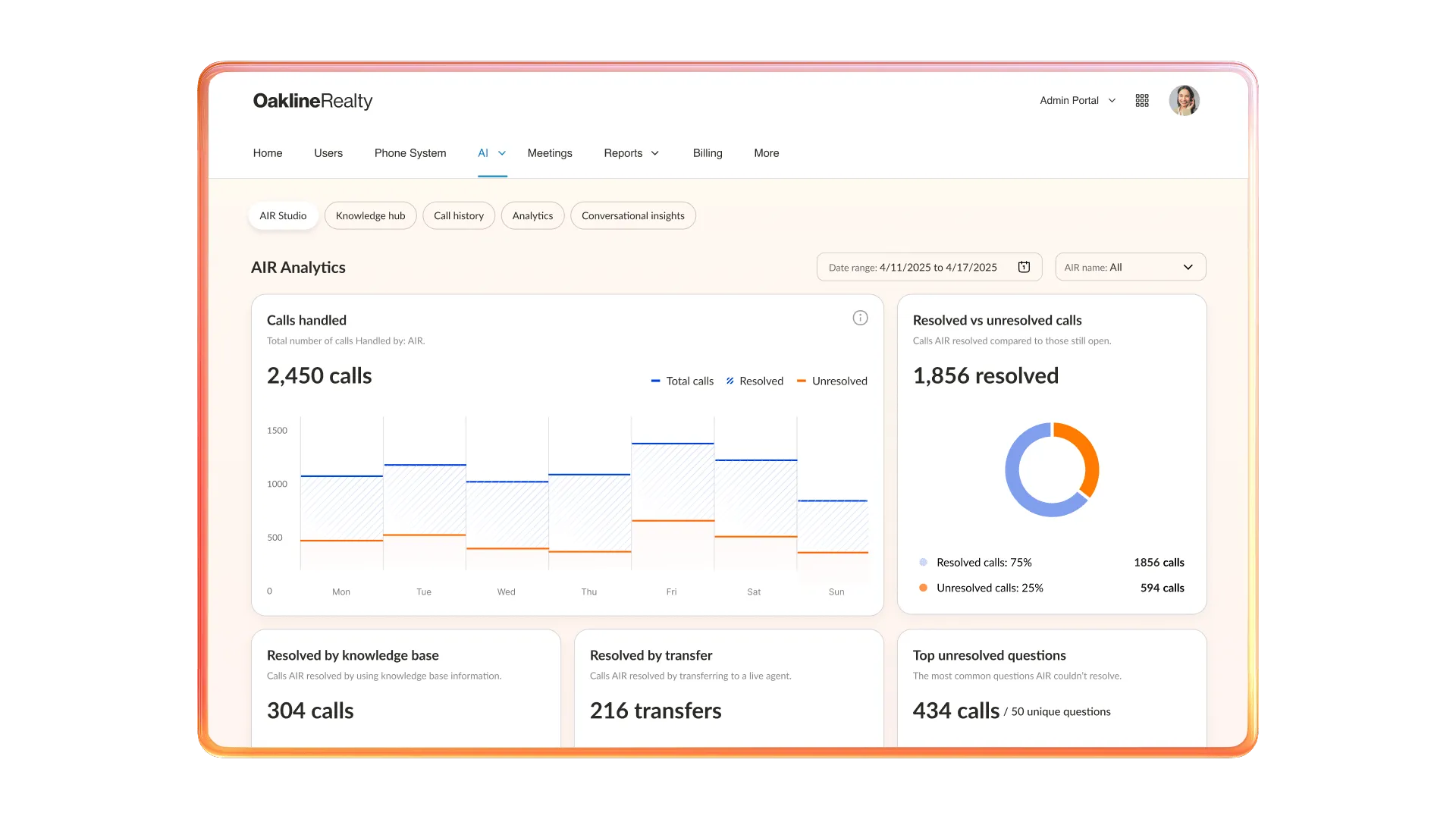
RingEX AI Receptionist dashboard showing call resolution rates, total calls handled, and top unresolved questions.

What’s next for West Virginia 211

The hotline is currently exploring the use of AI to provide preliminary resource information during off-hours, such as nights and weekends. By using the platform to answer basic questions about utility assistance or flood relief when specialists are unavailable, West Virginia 211 ensures its historical legacy of community care is bolstered by an always-on digital safety net.
To learn more about our customer, visit West Virginia 211.